Photographs, drawings, 16mm film installation, objects, archives (2022)
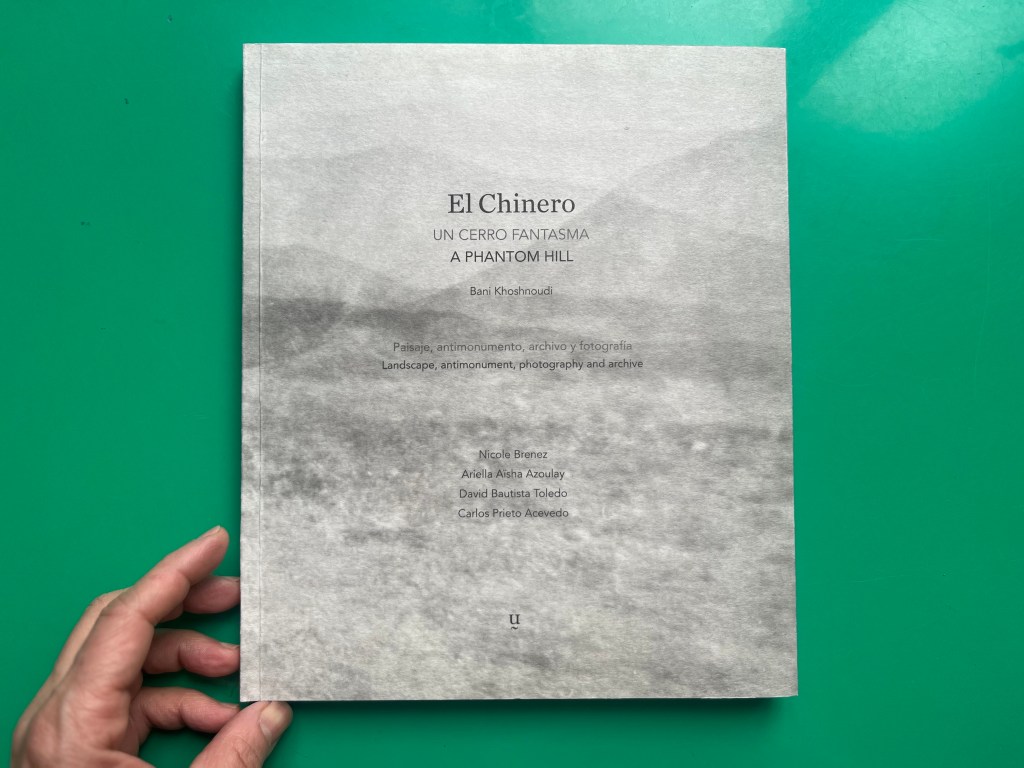
Book published in 2024 (Editorial Ñ, Mexico City, with the support of Fundación Jumex Arte Contemporaneo)
Who remembers those who died here?
Were they abandoned or did they lose their way?
Void and vanishing, the finitude of the archive.
A name for an invisible place.
This project came out of the need to open up a space to speak about the Chinese exprerience in Mexico, as a reminder of modernity’s relationship with labor, migration, violence and racism. The lost traces of a past made invisible.
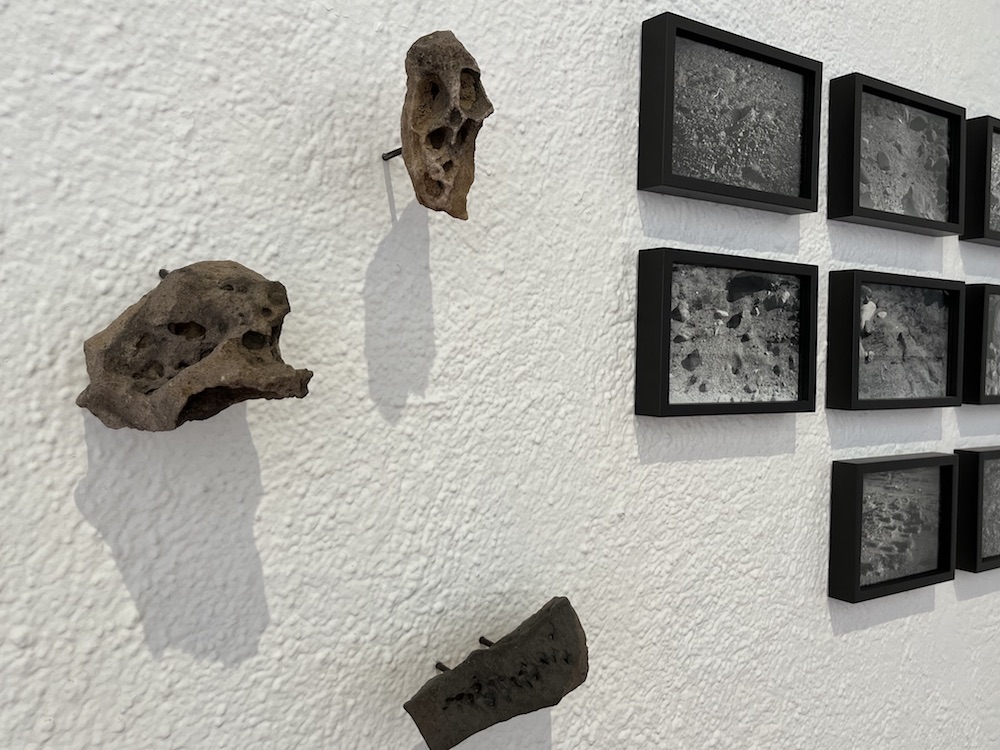
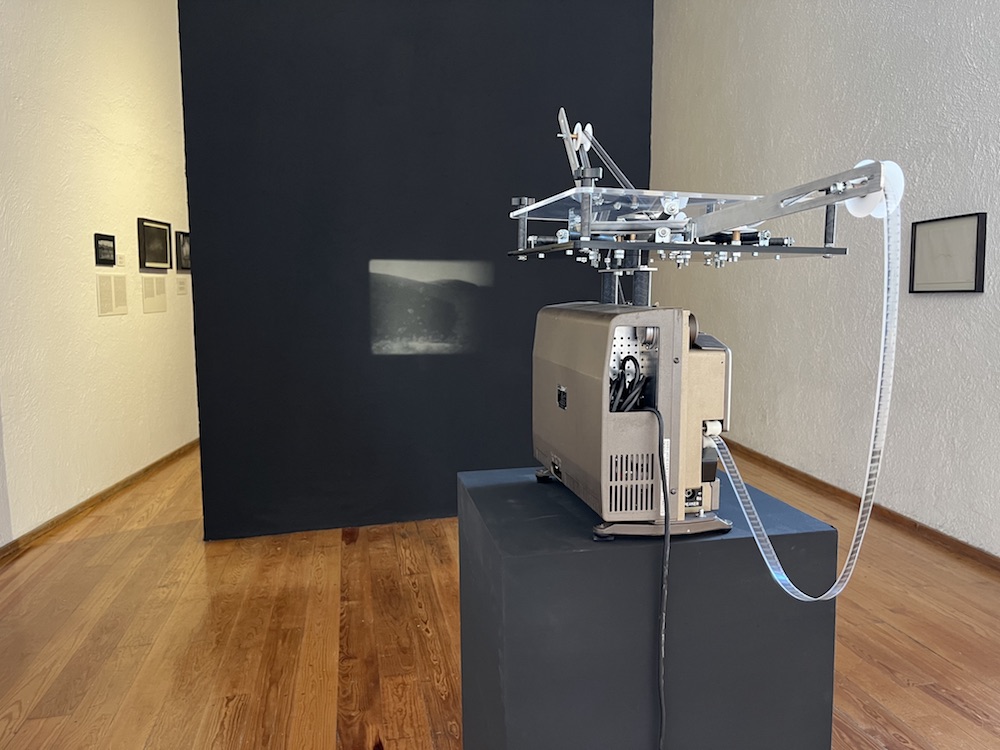

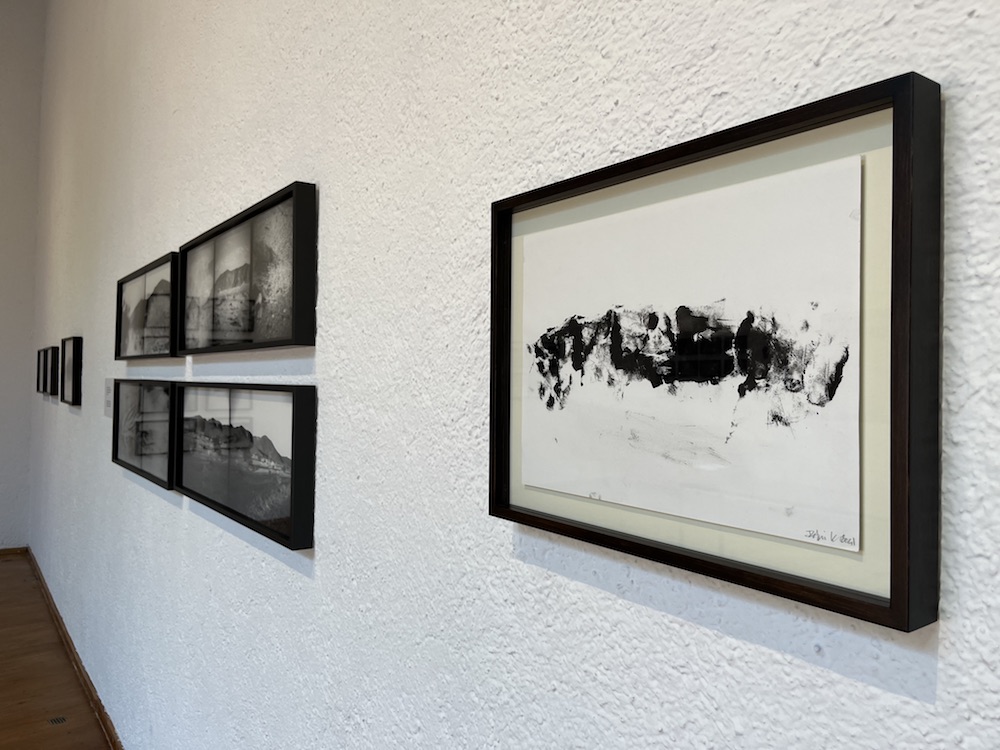


“El Chinero” is a small mountain in the desert, 140 km south of Mexicali in the Baja California region of Mexico. Nobody knows since when it bears this name, but everyone has heard of a tragic episode that took place here in 1916. Or were there many such episodes? Soon after the Mexican Revolution, a massive exodus took place as the newfound state began deporting and chasing out Chinese and Asian migrants who had settled in Mexico for decades.
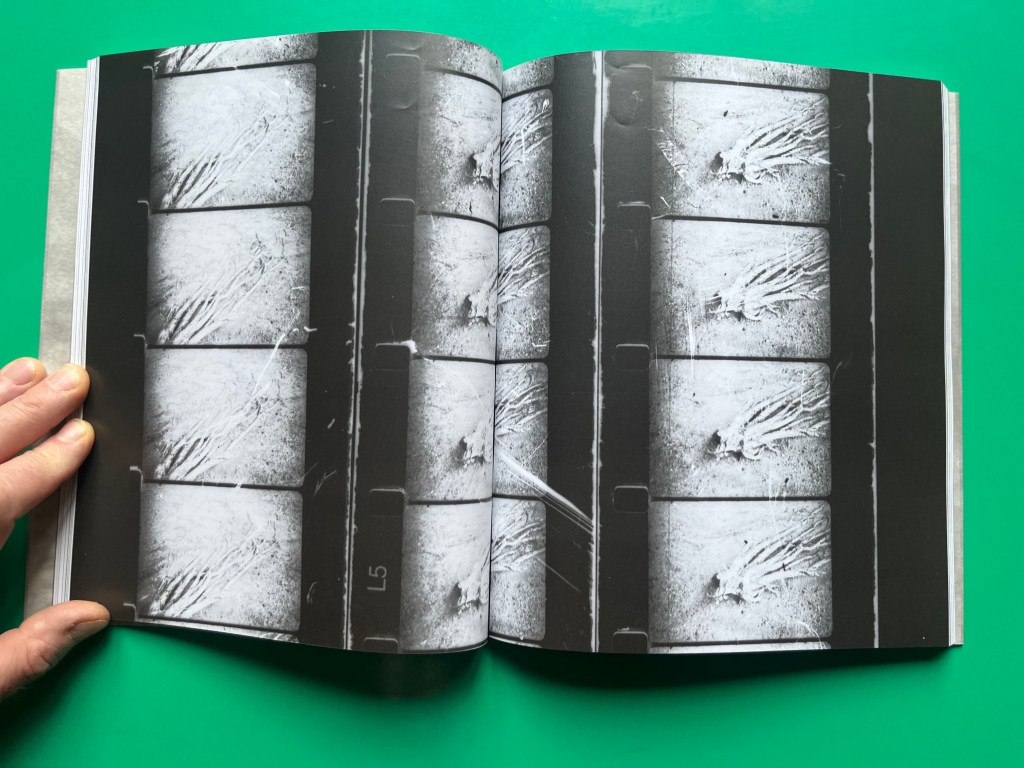
A site of tragedy yet with no traces or remnants to attest. How can one fill this memory void with images and artifacts in an attempt to construct an archive where none exists? While using photography and 16mm film to makes images and document these geographical sites where tragedy has occurred, I concentrate not only on the object in the image, but also on the texture and the materiality of film as a potential memory object in itself. The emulsion as a material that is impacted and altered physically through light and chemical processes can serve as a metaphor for the imprint, but also reveals to us the volatility of the act of documenting. Through different hand-made interventions while exposing and diverse development techniques using chemical processes and organic materials like phytogramming, caffenol, or the use of salts and samples from the earth, the work that results from my experiments reflects on the layers of our history and geology, impacted, altered, and degraded.”
The ghost-like presence evokes absence and loss, through the actual image itself, but also through the artifacts and accidents on the film matter. My concern is with the imprints of migration, the traces instead of the frontal or mediatic image, and how they can attest to a recurrence of violence in our societies with regards to displaced peoples. Exploring geographical sites where people have died, disappeared and become anonymous bodies (and matter), I am currently exploring how documentation and evidence can work against a general amnesia on these issues. I am also interested in concepts of the monument, their role in constructing national narratives, and the peripheral stories of the displaced and the disappeared; how the invisible have fallen from official history. “El Chinero” was conceived as the beginning of a long-term investigation on ideas of archive, and how to reflect on the history of nations, their territory, modernity, its tragedies and oblivion. My intentions are to work towards what would become a series of related projects, where I reflect on this necessity to document elements, even when these are ephemeral and abstract.
Bani Khoshnoudi
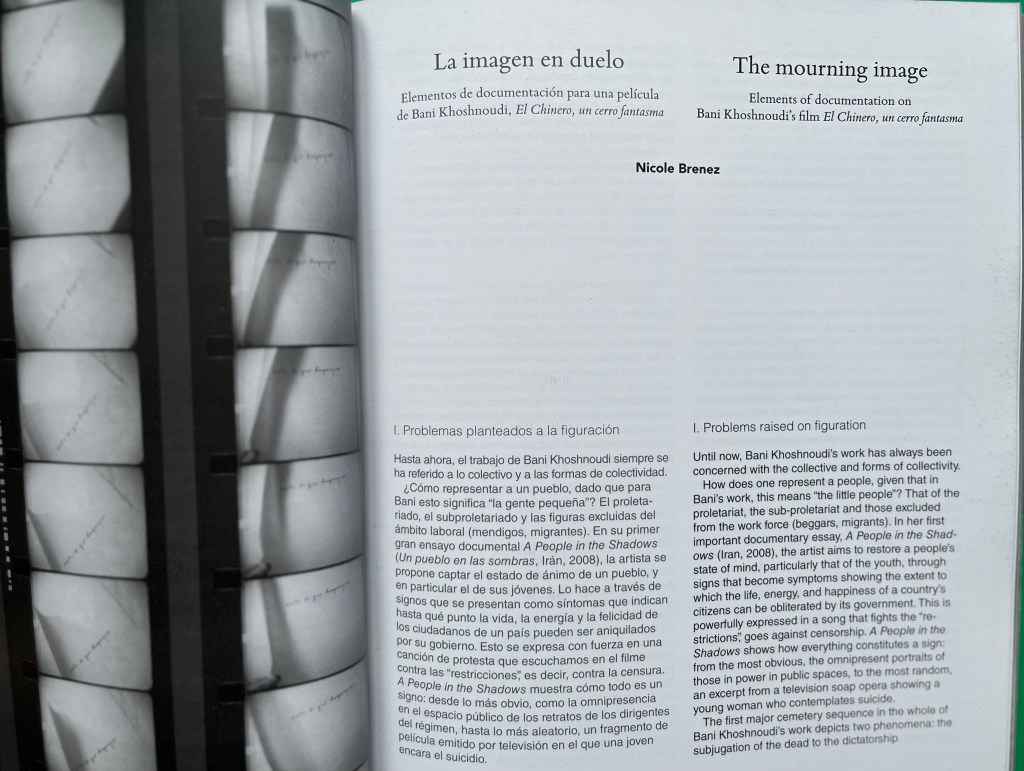
“El Chinero, un cerro fantasma” was exhibited at the Museo Experimental El Eco in Mexico City from April 23 to June 26, 2022. The exhibition consisted of 59 analog photographs, one 16mm film installation in loop, drawings, archival material (photos and text) and found objects from the actual site. A public program included a reading group and two conferences during the exhibit, one of which was a presentation by historian and writer, Ariella Aïsha Azoulay. “El Chinero, un cerro fantasma” was curated by French-Mexican curator, Michel Blancsubé for the Museo Experimental El Eco in Mexico City, and by Mexican curator, Carlos Prieto Acevedo for the Museo UABC in Mexicali.
A book featuring texts by Nicole Brenez, Carlos Prieto, Ariella Azoulay, David Bautista, and Bani Khoshnoudi was published in 2024 by Ediciones Ñ with support from Fundación JUMEX Contemorary Art Fund.

Exhibitions
- April 23 to June 26, 2022 – Museo Experimental El Eco, Mexico City
- February 16 to May 30, 2023 – Museo UABC, Institute for Cultural Research, Mexicali
Book, 2024 published by
Editorial Ñ, Mexico City, with the support of
Fundación Jumex, Arte Contemporaneo
 BANI KHOSHNOUDI